Office Clearance in Raynes Park

Office clearance in Raynes Park needs to be organised, careful and suited to the way modern workplaces use space. We clear office furniture, general contents and mixed workplace items in a way that supports a smooth handover, refurbishment or reset of the premises. Whether the task is a single room, a suite of rooms or a larger commercial fit-out, the focus stays on sensible removal, straightforward sorting and responsible onward handling of items that can be reused, recycled or disposed of.
Our work can include desks, chairs, storage units, filing items, reception furniture, small electricals and other office contents that no longer need to remain onsite. Where a workspace contains a mix of usable and obsolete items, we separate the clearance into practical stages so the right items are moved without disturbing what must stay. If you are comparing options, pricing and quotes can help frame the job before the clearance is arranged.
For many businesses, the most useful approach is a clearance that is planned around access and timing rather than rushed at the last moment. That may mean working around staff still on site, co-ordinating with contractors, or removing contents after a move has already taken place. A quick note of what needs clearing, what should be retained and any building restrictions is often enough to begin shaping a workable proposal. Clear instructions save time, especially where rooms contain mixed items or sensitive workplace material that needs attention.
What office clearance can cover
The service is designed for commercial interiors that need to be emptied, reduced or reset. That may involve long-used desks and task chairs, meeting tables, cupboards, shelving, pedestals, reception pieces, monitors and assorted office clutter that has built up over time. We can also handle clearance after relocation, where some items are being kept and others are being removed because the new setup differs from the old one. The aim is not just to take things away, but to leave the space in a condition that supports the next stage.
Office clearance is often chosen when a business wants the contents managed in one organised visit rather than item by item. Depending on the layout, that can include individual offices, shared work areas, storage rooms, breakout spaces and back-of-house rooms. If some pieces still have a useful life, they may be separated from general waste so the overall process stays more efficient and less wasteful. The best results usually come from clear room-by-room instructions and a sensible order for moving contents.
When a workplace contains paperwork, fixtures or equipment that are not simply disposable furniture, the service still needs to stay orderly. Items may need to be grouped for retention, donation, recycling or disposal, depending on their condition and the instructions given. A simple inventory can be helpful, but it does not need to be elaborate. The key is clarity: what stays, what goes and whether there are anything particularly heavy, awkward or fixed in place that needs special handling.
Furniture, equipment and mixed contents

Office clearances often begin with the largest items because they shape the rest of the job. Desks, cabinets, conference tables and similar furniture may need to be dismantled or moved in sections, especially where access routes are narrow or the building has shared corridors. We can manage those practical details so that the clearance stays controlled and the workspace is not left with avoidable damage or obstruction. That approach is useful whether the premises are being vacated entirely or simply stripped back to a leaner setup.
Many workplaces also contain mixed contents that do not fit neatly into one category. These can include archive boxes, display materials, storage tubs, office equipment, kitchen items, damaged chairs and surplus fittings accumulated over several years. A careful office clearance handles that variety without turning the job into a catch-all removal of everything in sight. If you also need related work, furniture clearance is a useful service page for items that are primarily furnishings rather than broader workplace contents.
- Desks, tables and meeting furniture
- Office chairs and storage units
- Reception, breakout and staff-area items
- Mixed contents from cupboards and storerooms
- Small electricals and general workplace surplus
Planning a tidy workplace clearance
The more structured the clearance, the less interruption it tends to cause. Businesses often find it helpful to identify the rooms involved, the items staying in place and any access constraints before the work begins. If lifts, loading points or shared entry routes are involved, those details can be built into the plan. It also helps to decide in advance whether the work is to be done before, during or after other trades are on site, so timings remain realistic.
When you are ready to discuss the scope, it is sensible to provide a description of the office size, the main item types and whether the contents include any large or awkward pieces. Photographs can be useful when the layout is complicated or when there are several rooms to review, but a written overview is often enough for a first step. If you want to make an enquiry, use our contact us page so the details can be reviewed properly.
Office clearances also work best when the handover point is clear. That might mean a vacant floor, a storage room to be emptied, or only certain categories of items to be taken away. Some clients want a thorough remove-and-clear approach; others need a targeted service that leaves desks or fittings in place while surplus items are removed. Either way, the work is easier to manage when the brief is specific and the priorities are ordered from the start.
Recycling and responsible handling
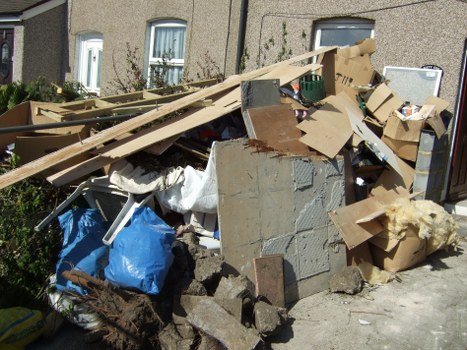
Commercial clearances should be handled with a sensible eye on reuse and recycling. Not every item is suitable for the same route, so the process benefits from sorting that separates reusable furniture from damaged items and general waste. Where practical, this helps reduce the amount of material heading for disposal and supports a more considered result overall. For businesses that want to understand the wider approach, recycling and sustainability sets out the principles behind responsible handling.
Office contents can include materials that need different treatment depending on their condition. Wood, metal, plastics, fabrics and electrical components do not all move through the same route, and the clearance should reflect that. If the job includes items with mixed materials, broken fittings or leftover storage contents, sorting them during collection can make the rest of the process more straightforward. That approach is particularly useful where the aim is to leave the site tidy without moving unnecessary waste through the building.
Responsible clearance is usually about proportion as much as volume. A modest office may still produce a varied load if it contains old storage, redundant equipment and worn furniture. A larger site may have more items, but the same principle applies: separate what can be reused from what must be removed and avoid unnecessary handling. The result is a practical clearance that respects the premises and the contents alike.
Different office situations
Not every office clearance starts from the same place. Some jobs follow a relocation and involve items that were packed late, left behind in cupboards or not needed in the new premises. Others follow a lease end and require a fuller emptying of the space. There are also clearances after refurbishment, where old furniture and loose contents must be removed before new installations can begin. Each version needs a slightly different sequence, even though the main purpose remains the same.
Flat clearance is a separate service page, but the comparison is useful in one respect: it shows how different premises need different handling. Offices usually involve more shared routes, more repetitive furniture and more mixed work items, so the clearance needs to be planned around the fabric of the building and the function of the rooms. We can adapt to the setting, whether the goal is to reduce clutter, empty storage or remove end-of-life office furniture from the floor.
Where the premises contain fitted items as well as loose contents, the brief should make the distinction plain. Clearances are generally simplest when fixed installations remain out of scope unless agreed otherwise. This avoids confusion and lets the removal work focus on the items that can be safely and appropriately taken away. A well-scoped job also makes it easier to sequence the work around staff access, cleaning and any follow-on contractors.
Office clearance in Raynes Park and the surrounding setting

Raynes Park is a south-west London district in the London Borough of Merton, shaped by suburban development and strong rail links. The station on the South Western Railway network helped the area grow in the late nineteenth and early twentieth centuries, and the local street pattern still reflects that period of expansion. Today the district combines residential roads, local shopping streets and a busy commuter character, with the Wimbledon Chase and West Barnes edges nearby contributing to its wider suburban setting. The area is close to the River Wandle corridor to the east and the broad green spaces of Wimbledon Common and Cottenham Park, both of which are important parts of the surrounding landscape.
Architecturally, Raynes Park is known more for its interwar and later suburban housing than for a historic core, but it does have a recognisable local centre around the station and main roads. The district includes shops, services and everyday amenities that serve the surrounding neighbourhoods, while the nearby routes connect towards Wimbledon, New Malden and other parts of south-west London. For a place without a medieval centre, its character comes from rail access, residential growth and the layered development of London suburbs during the modern era. That gives the area a practical, lived-in quality rather than a heavily monumental one.
Local life is shaped by access to parks, schools, rail services and main roads, with open spaces and residential streets sitting close together. The area sits within a wider borough that includes several distinct communities, so it is often understood through its station, shopping parade and neighbouring districts as much as through any single landmark. That mixture of convenience and suburban scale makes Raynes Park a familiar part of southwest London, with the everyday geography of streets, transport and green space defining it more than dramatic skyline features. Use our home clearance page if your project also includes domestic contents alongside office work.
Preparing the brief and the access
Good office clearance work depends on practical details being set out before the team arrives. Access routes, parking, loading space and any building rules all affect how the job is carried out. If an office sits in a shared block, it helps to note lift access, reception arrangements and any restrictions on moving items through common areas. Clear information keeps the clearance orderly and reduces the chance of avoidable delays once the work begins.
It is also useful to decide which items need separate attention. Some workplaces have archive storage, presentation materials, IT peripherals or specialist furniture that should be handled differently from everyday desks and chairs. If certain items must stay on site for handover or audit purposes, that should be identified early. The more precise the brief, the easier it is to sort the work into sensible stages and avoid unnecessary handling of items that are not part of the clearance.
Before you request a quotation, gather the basic facts about the rooms, the contents and the timing. That does not need to be a lengthy exercise; a short written summary can be enough to begin. If the job is urgent, time-sensitive or linked to another contractor, say so in plain terms. Good communication at the start usually leads to a clearer plan and a tidier result on the day.
Related clearance services

Some office projects overlap with other types of clearance, especially where storage rooms, kitchens, garages or external areas have also become cluttered. In those cases, it can be useful to look at the broader service pages alongside the main office work. Business waste removal is relevant when the job goes beyond furniture and includes general commercial waste that needs removing as part of a wider premises clean-out. The right mix of services depends on what is being left behind and what must be taken away.
Other premises may also need targeted removal of loose furniture before or after the office clearance itself. Where a site contains surplus chairs, shelving or tables that are no longer needed, the clearance can be aligned with the rest of the move so the end result is coherent rather than piecemeal. If the job centres on a single room, a storage space or a specific kind of contents, it is often worth describing that clearly when you send the details. For a quotation, please get in touch through contact us.
Our service is built around careful removal, useful sorting and a straightforward commercial process. If you are planning an office clear-out in Raynes Park, the next step is to define the rooms, the item types and the timing that works for your site. We can then look at the practical scope and produce a quotation that reflects the actual job rather than a guess. Start with the main contents, then refine the details and the rest becomes much easier to organise.